Where you study changes your monthly budget more than your tuition ever will, because at public universities tuition is usually zero and rent is the whole game. Two students on identical courses can have wildly different bank balances purely because of the city they picked. Here's the honest comparison, with the trade-offs nobody puts in the glossy brochures.
The honest monthly numbers
| City type | Rough total/month | Of which rent | The catch |
|---|---|---|---|
| Munich | ~€1,100-1,300 | €700-950 (a room in a WG) | Most expensive city in Germany; housing hunt is fierce |
| Berlin | ~€950-1,150 | €550-800 | Rents rising fast; finding any room takes weeks |
| Frankfurt / Hamburg / Cologne | ~€950-1,100 | €500-750 | Big-city prices without Munich's extremes |
| Smaller cities (Leipzig, Aachen, Dresden, Magdeburg, Chemnitz) | ~€700-850 | €300-500 | Quieter; fewer big employers nearby |
These are realistic 2026 figures for an international student living in a shared flat (WG), cooking at home, on the public-transport semester ticket. Eating out, travel, and a private studio push them up fast.
Where the money actually goes
- Rent is 50-70% of your budget and the only number that really separates cities.
- Health insurance: roughly €130-€140/mo everywhere, see the insurance guide.
- Food: €200-€300/mo cooking at home; Aldi/Lidl/Penny are your friends nationwide.
- Transport: often near-free with your semester ticket.
- Phone, fun, misc: €100-€200/mo, this is where city culture tempts your wallet.
Munich: pay more, but for what?
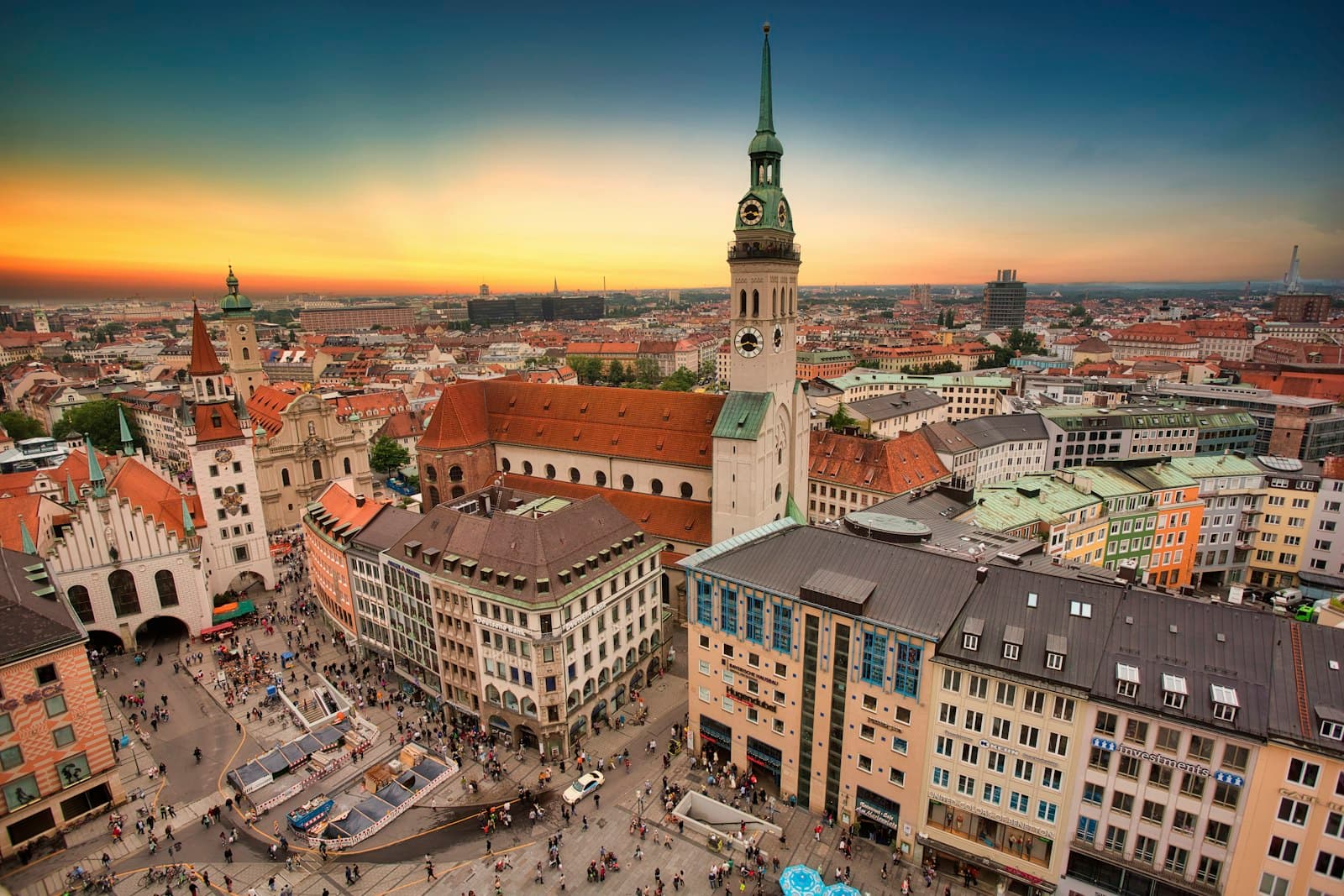
You get arguably Germany's strongest job market (BMW, Siemens, Allianz, a huge tech scene), stunning surroundings, and the Alps an hour away. You pay for it with the country's highest rents and a housing search that can genuinely take months. Worth it if your field is concentrated there and you can absorb the rent.
Berlin: more space, more chaos
Cheaper than Munich, endlessly more to do, a magnet for startups and creatives, and a big international community so you're never the only foreigner. The downside is a housing market so tight that finding a room is a part-time job in itself. Budget weeks of searching and start before you arrive.
The underrated move: a smaller city
How to decide
- Follow your field, not the city's fame. The right programme in a small town beats a weak one in Berlin.
- Run your real numbers in the cost calculator for each shortlisted city.
- Talk to someone living there. A 20-minute call with a current student tells you more about rent reality than any table, including whether you'll actually find a room.
FAQ
What's the cheapest way to study in Germany?
A public university (free tuition) in a smaller city, living in a WG and cooking at home, can run around €750-€850/month all-in.
Is Munich worth the extra cost?
If your field's top employers are there and you can cover the rent, yes. Otherwise the same degree in a cheaper city leaves you with more money and less stress.
How much rent should I budget?
€300-€500 for a room in a small city, €550-€800 in Berlin, €700-€950 in Munich. It's your single biggest cost.